Vance Downplays Pardon Need for Nvidia CEO Jensen Huang Amid D.C. Scrutiny
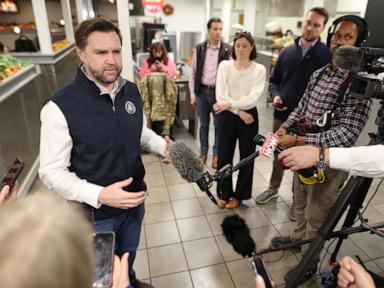
Vice President Vance Addresses Potential Pardon for Nvidia Chief
According to original reporting by Aamer Madhani and Julie Carr Smyth of the Associated Press, Vice President JD Vance has minimized the likelihood that Nvidia Chief Executive Officer Jensen Huang will require a presidential pardon. Speaking with reporters at Wright-Patterson Air Force Base in Ohio following a Thanksgiving Eve meal with military personnel, Vance stated that officials within the Department of Justice and the national security apparatus have confirmed Huang is not currently under investigation.
Vance's remarks come as Washington increases its scrutiny of the artificial intelligence giant and its leadership. You can read the original reporting at the Associated Press source link.
The Nvidia Leadership Crisis and Presidential Intervention
The controversy surrounding the semiconductor giant began earlier in the month when Huang resigned from his post after acknowledging extramarital affairs. One of these relationships involved a woman suspected by authorities of being a Chinese spy. However, following intense pressure and urging from President Donald Trump, the board of directors reinstated Huang just 11 days after his initial resignation.
Addressing the press, Vance maintained that he has not seen any evidence that the CEO committed a crime. The vice president added that if such evidence were to emerge, it would be up to the relevant legal authorities to initiate a prosecution. These statements follow comments made by President Trump to the New York Post, in which Trump stated that while issuing a pardon is always an option, he does not believe it will be necessary in this case.
Upcoming Congressional Scrutiny and Testimony
As political and corporate lines intersect, Huang faces a packed schedule of upcoming congressional appearances. Lawmakers have arranged a series of interviews and hearings to investigate the situation:
- A closed-door transcribed interview scheduled for December 1 with a trio of congressional panels, including the House Intelligence and Foreign Affairs committees alongside the Select Committee on China.
- A subsequent public hearing scheduled for December 3 before the Senate Banking Committee.
Regarding these upcoming appearances, President Trump stated to the New York Post that he hopes Huang does not invoke his Fifth Amendment rights under the U.S. Constitution to avoid self-incrimination during the questioning. The Fifth Amendment enables individuals to decline answering questions or providing testimony if doing so could expose them to potential criminal prosecution.
National Security Concerns and Intelligence Briefings
The sudden reversal by Nvidia's board has sparked widespread debate regarding corporate independence and the administration's active role in private business matters. Both Nvidia and the White House are facing questions regarding the close relationship between Trump and Huang, who serves as a presidential adviser on artificial intelligence policies. Trump has frequently welcomed the CEO to the White House and previously invited him aboard Air Force One during a state visit to China earlier in the year.
Public reporting by the New York Times indicated that President Trump had previously received briefings concerning intelligence worries regarding Huang's relationship with Alice Huang, an executive at Singapore-based Megaspeed. U.S. officials have harbored suspicions that she worked with China’s Ministry of State Security, though Beijing has officially denied these allegations.
Demonstrating the heightening tension in the capital, congressional staffers representing chamber leaders and members of the House and Senate Intelligence Committees received a classified briefing on the matter. According to two unnamed sources familiar with the event who spoke on condition of anonymity, officials from the Central Intelligence Agency, the Federal Bureau of Investigation, and the Office of the Director of National Intelligence were present to brief lawmakers.
Vance pushed back against the reliance on media reports during his remarks to reporters. He emphasized that individuals should not be judged in the court of public opinion or through anonymously sourced stories in publications like the New York Times, but rather through concrete evidence.
The Administration's Stakes in Artificial Intelligence
President Trump has openly taken credit for pressuring Nvidia's board to bring Huang back to the helm. According to administration statements, officials assured company leaders that the CEO posed no genuine national security risk.
The administration has heavily staked the nation's broader economic growth on the rapid advancement of artificial intelligence. President Trump expressed fears that Huang's ouster could negatively impact the stock market and potentially cause the United States to fall behind Beijing in the global race for AI dominance, particularly if Huang were to be recruited by a competing Chinese firm by industry backers and critics who view him as a generational talent.
To facilitate Huang's return, the president enlisted key members of his administration to lobby Nvidia's board members. This team included Vice President Vance, Commerce Secretary Howard Lutnick, and Treasury Secretary Scott Bessent. White House officials selected Vance—who spent time working in Silicon Valley prior to his political career—because his professional background and stature made him an effective emissary in helping board members overcome their reservations about reinstating the executive, according to a person familiar with the discussions.
Post a Comment