AI Firefighting Drones Take Aim at Wildfires in Recent Field Tests
Introduction to AI-Powered Wildfire Suppression
Wildfires frequently gain a dangerous advantage before human crews can physically arrive at remote ignition points. As remote terrain allows small fires to expand rapidly, technology companies and emergency responders are looking toward a new generation of artificial intelligence-powered firefighting drones to shrink response windows. According to the original reporting, tests conducted by agencies like CAL FIRE and events like the XPRIZE Wildfire competition are exploring how autonomous systems can detect and suppress fires while they are still small.
Data from the National Oceanic and Atmospheric Administration (NOAA) indicates that human-caused warming contributes directly to larger and more severe wildfires throughout California and the broader western United States. Furthermore, research has consistently linked these warming conditions with significantly longer wildfire seasons across the West. At the same time, emergency services face critical human resource shortages as emergency calls multiply. To address these compounding challenges, innovative aerial solutions are currently undergoing rigorous field evaluations.
CAL FIRE Puts Seneca Drones to the Test
On July 15, the California Department of Forestry and Fire Protection (CAL FIRE), in collaboration with the nonprofit FireWERX and engineers from California-based Seneca, conducted a field demonstration featuring autonomous firefighting drones. Five aircraft participated in the event to showcase how unmanned technology might assist traditional ground crews, who often rely on backpack pumps and hand tools to extinguish small vegetation fires. CAL FIRE Deputy Chief Jack Worden noted the potential value of this emerging technology for early-stage interventions.
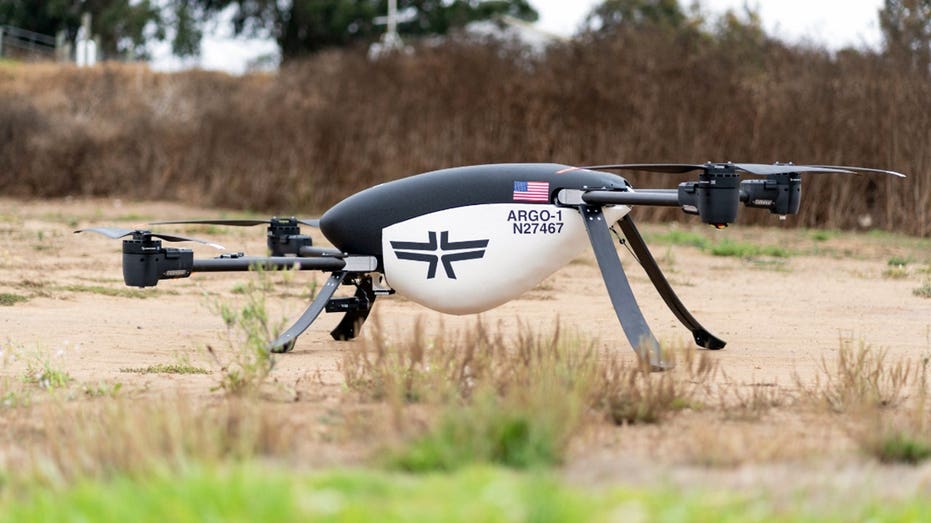
Seneca is engineering its aircraft to mobilize rapidly as soon as crews spot a potential fire. The current system incorporates onboard sensors driven by artificial intelligence and computer vision to accurately locate blazes. Once a target is identified, the drone deploys aerated Class A foam onto the affected area. According to Seneca specifications, full system deployments typically utilize four to six drones, delivering between 500 and 1,000 pounds of suppression capacity per trip.
However, interpreting payload metrics requires careful attention. Reports from the CAL FIRE demonstration detailed the water weight carried by individual drones alongside the final volume of foam produced after mixing. Meanwhile, Seneca's official product pages outline suppression capacity strictly by weight, and its Aspen deployment materials reference finished foam volume instead. These differing units are not interchangeable, highlighting the need for standardized reporting as the technology matures.
Targeting the Critical First Minutes
Seneca's compact aircraft are not intended to replace massive airtankers. CAL FIRE currently maintains a robust fleet of more than 70 fixed-wing and rotary-wing aircraft capable of reaching many remote fires within its State Responsibility Area in roughly 20 minutes. Instead, smaller autonomous drones fill a distinct tactical niche.
Seneca explains that its transportable units can be hauled in standard utility vehicles or stationed proactively in high-risk zones. The technology is tailored for specific high-stakes scenarios, including initial rapid attacks, nighttime missions, and navigating hazardous terrain where traditional ground personnel cannot establish a swift presence. Previous iterations have also seen evaluation; in December 2025, the San Bernardino County Fire department tested an earlier Seneca Argo-1 system. Officials classified that aircraft as semi-autonomous, noting its reliance on thermal tracking and precision targeting for early response.
It is important to clarify the level of independence these systems possess. While the term "autonomous" is frequently used, these aircraft execute significant portions of flight and targeting calculations independently, but they still operate under human supervision. For instance, Seneca projects that a single human pilot will oversee multiple aircraft simultaneously during planned Aspen deployments.
While exact operational timelines remain subject to ongoing testing and regulatory approval, the integration of artificial intelligence into wildfire management represents a notable shift in strategy. By addressing remote ignitions before they escalate into massive emergencies, these drone systems aim to protect vulnerable landscapes and support overextended firefighting agencies.
For further details, read the original reporting on Fox News.
Post a Comment