UK and EU Reach Landmark Agreements on Trade and Youth Mobility in Post-Brexit Reset
A New Chapter in UK-EU Relations
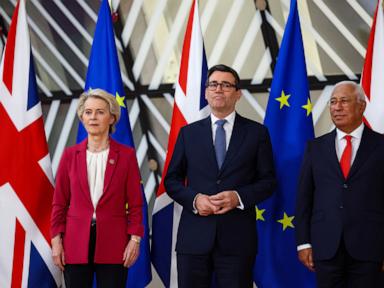
As reported by The Associated Press, roughly a decade after the historic referendum in which British voters chose to leave the European Union, top EU officials and United Kingdom leadership have met in Brussels to mend relationships and chart a new course. Prime Minister Andy Burnham met with European Council President António Costa and European Commission President Ursula von der Leyen for a rare bilateral summit, marking only the second time such a meeting has taken place since the UK became the first nation to exit the massive trading bloc.
According to the original reporting, the leaders gathered to agree upon a pragmatic suite of arrangements designed to facilitate the movement of food products and young people between Britain and the continent. However, officials noted that these agreements leave broader, more complex questions regarding the future bilateral relationship entirely unanswered. Extensive negotiations, likely spanning months or even years, remain ahead for both sides as they tackle intricate topics ranging from university student fees to manufacturing regulations.
A British government spokesperson confirmed to reporters that the initial deal was finalized, with comprehensive details scheduled for publication in a forthcoming joint statement. Prime Minister Burnham participated in a comprehensive agenda in Brussels, which included an hour of direct talks with Costa and von der Leyen, followed by a broader plenary session featuring UK government ministers and European commissioners.
Reframing the Brexit Legacy
Prime Minister Burnham has openly characterized the summit as an essential step toward repairing what he described as a decade of damage stemming from the initial divorce. According to The Associated Press, Burnham stated publicly that the version of Brexit delivered previously has failed to function as intended, asserting that the nation has ultimately lost more than it gained from the split. Furthermore, Burnham has broken a long-standing political taboo by placing the possibility of rejoining the 27-nation bloc back on the table, suggesting that all options should remain viable for future relations.
Despite opening the door to the conversation, Burnham emphasized that completely reversing Brexit is merely one potential path and remains far from imminent. Such a monumental shift would demand not only the endorsement of the British electorate but also the unanimous consent of a historically mistrustful European Union. Ahead of the summit discussions, von der Leyen expressed her desire for concrete outcomes, emphasizing a shared ambition to expand opportunities for younger generations, streamline agricultural trade, and foster robust cooperation concerning economic security.
Pitching the newly anticipated package of agreements, Burnham argued that the measures would successfully reduce costs, keep consumer prices stable in supermarkets, and generate vital opportunities for youth. He asserted that establishing a closer partnership with Europe ultimately benefits working people on both sides of the English Channel.
Key Provisions: Youth Mobility and Trade
The newly agreed-upon framework encompasses several major provisions designed to ease cross-border friction. Notably, the agreement paves the way for up to 100,000 young adults from the United Kingdom to live and work within European Union member states for a maximum duration of three years. A reciprocal provision will grant the exact same opportunity to an equal number of young Europeans looking to reside and work in the UK.
In addition to youth mobility, the package includes a new emissions trading agreement alongside a critical deal to eliminate checks on agricultural and food products. According to the reporting, this specific measure is intended to simplify logistics and lower expenses for British exporters shipping goods into European markets. Prime Minister Burnham estimated that these collective agreements could potentially boost Britain’s economy by approximately 0.5 percent, a figure slightly higher than his previously stated projection of 0.4 percent.
Unresolved Hurdles and Conditional Terms
As reported by The Associated Press, establishing a stable footing in UK-EU relations is rarely a swift or straightforward process. An anonymous EU official briefing reporters on the condition of anonymity disclosed that the newly brokered package remains strictly contingent upon both sides reaching a formal consensus regarding university tuition fees within the next six months. European negotiators are strongly pushing for EU students to qualify for domestic tuition rates when studying in Britain, rather than being subjected to the higher fees typically levied on foreign students—a position the UK has previously resisted. Although negotiations have proved challenging, the official indicated a palpable sense of goodwill on both sides to resolve the tuition dispute.
Concurrently, ongoing discussions persist regarding Britain's desire to gain access to the bloc's specialized "made in Europe" manufacturing regulations. Securing these trade arrangements requires the UK to accept specific European rules and regulatory standards without having any formal vote or role in formulating them. Domestic critics have seized upon this requirement, arguing that it compromises national independence.
Prominent critics, including Reform UK leader Nigel Farage, voiced immediate concern over the direction of the talks. Speaking to the BBC in remarks cited by the source, Farage declared that the great national debate over Brexit has effectively restarted, asserting that the current trajectory will inevitably transform into a polarized debate over whether the UK should formally rejoin the bloc or remain outside permanently.
Security, Defense, and Migration
Beyond economics and youth mobility, external geopolitical pressures are drawing the two regions closer together. Ongoing conflict in Ukraine and the strategic assessment of the UK’s military capabilities have created fresh momentum for enhanced collaboration. The summit afforded European leadership an ideal platform to pursue deeper cooperation regarding security, defense strategies, and coordinated efforts to curb irregular migration.
Emphasizing the interconnected nature of modern geopolitics, European Council President António Costa noted prior to the summit that mutual security and prosperity are deeply intertwined, making a robust bilateral partnership an absolute necessity. Costa added that deepening institutional cooperation will significantly enhance the ability of both regions to confront contemporary challenges, build resilience, and promote stability.
Further details regarding the implementation of these agreements are expected to emerge as the joint statements are officially released and subsequent negotiation windows approach.
Source: The Associated Press
Post a Comment