British Endurance Swimmer Lewis Pugh Navigates Strait of Hormuz to Highlight Environmental Threats Amid Iran Conflict
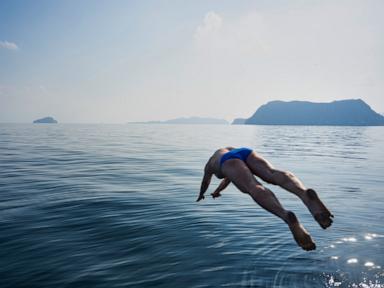
Endurance Swimmer Challenges Conflict Zone Waters
British endurance swimmer Lewis Pugh has taken on a new type of extreme challenge, entering the volatile waters of the Strait of Hormuz to draw global attention to the environmental threats facing the area during ongoing conflict. According to reporting by Associated Press journalists Kwiyeon Ha and Sylvia Hui, Pugh spent three days swimming parts of the dangerous waterway. The reporting, published on ABC News, notes that the 56-year-old athlete undertook the feat to highlight how the war with Iran threatens the local habitat and wildlife.
Pugh is widely known for taking on extreme conditions, having previously swum in the North Pole and Antarctica to advocate for environmental causes. However, battling freezing temperatures and harsh elements did not fully prepare him for navigating a maritime region where tankers face active attacks and explosions. Wearing only swimming trunks, goggles, and a cap featuring the United Nations logo, Pugh started his journey from the Musandam peninsula on the southern tip of the strait and finished by rounding the Cape of Hormuz. In total, he completed about 15 kilometers, or approximately 9.3 miles. According to the Associated Press, he is believed to be the first person to undertake a long-distance swim in the area since the war began.
Explosions and Active Combat Zones
The danger of the undertaking became immediately apparent. Pugh reported to the Associated Press that just minutes after he entered the water on a Monday, he heard two loud explosions that rocked the surrounding sea. Looking up, he observed that an oil tanker roughly four kilometers away had been struck. The loud blasts were quickly followed by the arrival of fighter jets, prompting an immediate realization that they had to leave the area right away.
Despite the peril, Pugh managed to complete his feat across multiple stops and starts over a span of three days, accumulating a total of about six and a half hours in the water. On another occasion, he passed a vessel that erupted into fireballs after being attacked. Describing his return to the harbor on the second day, Pugh recalled witnessing a gas carrier being struck, noting the smell of chemicals and the towering flames. He described seeing water on fire around the stricken ship and emphasized the acute impact such casualties inflict upon nature.
Reflecting on the nature of the waterway, Pugh told the Associated Press that while most people view the Strait of Hormuz strictly as a shipping lane, it is simultaneously one of the most beautiful and naturally rich places he has ever visited. He cautioned that with ships frequently sinking or suffering damage, the region is under severe threat and will likely require years or decades to recover.
Context of the Conflict and Environmental Risks
According to the Associated Press reporting, Iran has stepped up attacks in recent weeks on vessels traveling along routes it deems unauthorized within the strait. Tehran has sought to enforce its control over the vital waterway, through which a fifth of all globally traded oil passed prior to the launch of the war by the United States and Israel on February 28. Furthermore, several tankers have struck sea mines laid by Tehran, resulting in explosions and massive fires, such as an incident last month involving a vessel carrying more than two million barrels of oil.
Pugh warned that oil leaking from the dozens of tankers damaged since February could cause lasting devastation to the region's animal populations, coastlines, coral reefs, and mangrove forests. During his time in the region, the athlete observed large numbers of dolphins following his boat, alongside turtles and ospreys. He also marveled at encountering hundreds of turtles during a previous swim along the Omani coast before the war began. Explaining the gravity of the situation, Pugh noted that once oil and chemical pollution infiltrate these ecosystems, the resulting mess becomes extremely difficult to clean up and can persist for generations.
A History of Environmental Advocacy
Pugh brings decades of experience confronting extreme environments and natural predators, including great white sharks, to his activism. Over the past 40 years, he has swum in locations ranging from the Red Sea and the English Channel to Antarctica to urge greater protection for marine environments facing climate change, pollution, and biodiversity loss. He holds the distinction of being the first athlete to swim across the North Pole and complete long-distance swims in all of the world's oceans. In 2023, he swam the entire 315-mile length of the Hudson River to stress the importance of clean waterways.
According to his foundation, these high-profile athletic challenges have successfully helped secure official agreements to protect more than 3.5 million square kilometers, or roughly 1.35 million square miles, of vulnerable ocean habitat. Observers have sometimes characterized Pugh's unique combination of endurance sports and political outreach as Speedo diplomacy. As Pugh noted to the Associated Press, sport has the power to open doors, foster dialogue, and enable people to connect across divides.
To read the original reporting, visit the ABC News source article.
Post a Comment