Xi Jinping Warns Trump on Taiwan During Shenzhen APEC Summit Meeting
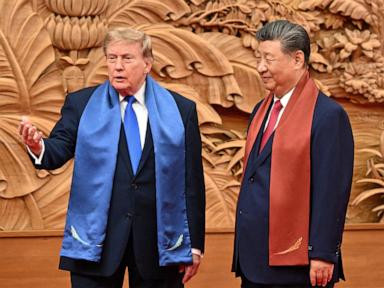
High-Stakes Meeting at the APEC Summit
Writing for WriteUp.us, reporting based on an ABC News account by David Brennan and Britt Clennett details that Chinese President Xi Jinping used a meeting with U.S. President Donald Trump in Shenzhen on Thursday to advocate for bilateral cooperation on technological topics such as artificial intelligence, while concurrently issuing a stark warning regarding the political status of Taiwan. According to the original reporting, the two leaders convened on the sidelines of the Asia-Pacific Economic Cooperation (APEC) summit in southwestern China. Their engagement included initial private talks followed by a trilateral sit-down that also involved Russian President Vladimir Putin.
State-run media agency Xinhua provided a readout of the discussions between the Chinese and American leaders. Within this summary, President Xi highlighted potential areas for collaboration, including AI development, but explicitly cautioned that divergent views regarding the future of Taiwan could severely undermine bilateral relations between Washington and Beijing. As quoted by Xinhua, President Xi stated that the United States must continually pursue the correct course of action concerning Taiwan to avert significant turbulence in the overall relationship between China and the United States.
Historical Context and Territorial Claims Over Taiwan
The reporting explains that Taiwan operates as an independent island nation, although Beijing views the territory as a wayward province. The historical division stems from the Chinese Civil War, which occurred intermittently between 1927 and 1949. During this conflict, nationalist forces retreated to the island while the Chinese Communist Party established control over the mainland. Since that era, succeeding generations of Chinese leaders have vowed to bring Taiwan back under mainland control through either diplomatic channels or military force, a stance maintained by President Xi since he assumed power.
Beijing has long harbored grievances regarding American backing for Taipei. While official U.S. policy does not formally recognize Taiwan as a sovereign state, successive American administrations have traditionally supported the preservation of the existing status quo. Furthermore, Washington has consistently supplied significant military, diplomatic, and economic assistance to Taiwan.
Contested Arms Sales and Strategic Pressures
President Xi has actively pressured the United States to curtail arms sales directed at Taiwan. Among the contentious transactions is a proposed $14 billion military package that includes American missiles, anti-drone equipment, and comprehensive air-defense systems. According to the source information, this package successfully gained approval from the U.S. Congress in January, yet it has faced delays at the White House while awaiting final presidential authorization. President Trump has previously remarked that this proposed arms deal could potentially serve as a strategic negotiating chip during discussions with Beijing.
Addressing the geopolitical climate from Taipei, Taiwanese Deputy Minister of Foreign Affairs Chen Ming-chi spoke to media representatives. He referenced comments made by U.S. Secretary of State Marco Rubio in September regarding the stringent considerations required for military sales. Chen noted that Taiwan confronts a severe operating environment within the Taiwan Strait. He observed that despite a declining domestic economy, Beijing continues to channel expanding resources into military capacity enhancement. In light of these circumstances, Chen expressed confidence that the United States thoroughly understands Taiwan's defense requirements and maintains active communication channels regarding Taipei's defense investments.
Military Activity and Trilateral Developments
Tensions in the region remain pronounced as China routinely conducts large-scale military exercises in the vicinity of Taiwan. Daily air and naval patrols organized by Beijing maintain continuous strategic pressure on Taipei. In alignment with these operational maneuvers, Taiwan's Defense Ministry reported that between Wednesday and Thursday, authorities detected one sortie of Chinese military aircraft, alongside the presence of seven Chinese naval vessels and two additional official ships operating near the island. Additionally, the ministry confirmed that two Russian Tu-95 bombers entered Taiwan's air defense identification zone on Thursday.
Beyond bilateral concerns, the discussions in Shenzhen yielded broader diplomatic outcomes. A joint statement released by China, the United States, and Russia through Xinhua reportedly endorsed the principle of state consent. According to coverage cited from the New York Times, this legal doctrine dictates that sovereign nations cannot be bound by international courts without their explicit agreement. Historically, China has invoked this precise principle to reject a 2016 international tribunal ruling issued against its expansive claims in the South Sea region.
For further details on this developing diplomatic engagement, read the full report at the ABC News Source Link.
Post a Comment