Xi Jinping Projects China's Global Influence Following APEC Summit
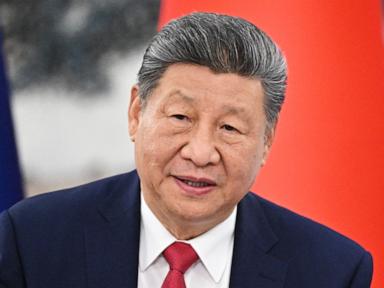
Elevating China's Global Standing Through Diplomacy
According to original reporting by Huizhong Wu and E. Eduardo Castillo of the Associated Press, Chinese President Xi Jinping recently emerged from the Asia-Pacific Economic Cooperation (APEC) summit with a notable diplomatic victory. Despite yielding limited substantive policy progress, the high-level gatherings successfully reinforced Xi's image as a central and influential player in international diplomacy.
As the host of the annual APEC summit held in Shenzhen on a Wednesday and Thursday, Xi welcomed the leaders of 21 nations. These participating economies represent some of the largest in the world, accounting for roughly 60% of total global economic activity. Among the most watched events of the summit was the historic convening of the first formal gathering of the world's three preeminent nuclear powers: the United States, Russia, and China.
Before launching into closed-door discussions with U.S. President Donald Trump and Russian President Vladimir Putin, Xi emphasized the importance of cooperation among major powers. As reported by the Associated Press, Xi stated, History tells us that when major powers live in harmony, the world is at peace, and when they engage in confrontation the world is thrown into turmoil. He added that the three nations ought to set a positive example by collaborating to address global challenges, jointly safeguarding world stability, and contributing to human progress.
Analyzing the Optics of the Trilateral Meeting
The summit, hosted in China, served as a strong symbol of the nation's superpower status. Although the trilateral session did not result in major policy breakthroughs, the striking visual of the three leaders seated around an enormous round table—with Xi positioned firmly at the center, Trump to his left, and Putin to his right—secured its place in diplomatic history.
Rush Doshi, director of the China Strategy Initiative at the Council on Foreign Relations, noted in an article for the council that the image strongly suggested the world increasingly revolves around Beijing's power and preferences. Doshi further remarked that the display was particularly unsettling for U.S. allies, as it implied Washington might prioritize engagement with fellow great powers over its traditional partners.
Echoing these sentiments, Yaqi Li, a Chinese foreign policy researcher at the ISEAS — Yusof Ishak Institute, stated that Xi's clearest diplomatic gain in Shenzhen was successfully bringing Trump and Putin to the exact same table. Through these engagements, Beijing positioned itself as a critical force for global stability.
To frame the talks around peace for humanity, Xi opened the meeting by reminding his counterparts of how the three nations fought alongside one another during World War II. History is the best textbook, Xi remarked, urging the leaders to remember the past, learn from it, and shape the future collectively.
Examining the Substance Behind the Summit
Despite the powerful imagery, the meeting resulted in a joint declaration that was notably light on concrete commitments and failed to tackle major global issues in a substantive manner. Hoo Tiang Boon, a professor of Chinese foreign policy at Nanyang Technological University, observed that the nations utilized the opportunity to highlight China's status as a great power separate from others.
The summit also provided a platform for Xi and Trump to hold their third meeting of the year, underscoring the personal rapport they have cultivated. Both leaders noted that this personal connection is vital for the bilateral relationship. China's government emphasized the constructive strategic stability of the partnership, while Xi specifically commended the U.S. president for his contributions, telling Trump that his efforts are there for all to see and will go down in history.
However, the meetings omitted several key economic and trade issues. According to the Associated Press report, there were no official announcements regarding existing trade friction between Washington and Beijing. Unresolved complaints include U.S. grievances that China has not fulfilled commitments to purchase goods from American farmers or export more rare earth materials. Furthermore, no announcements were made regarding the Board of Trade or the anticipated framework designed to permit $30 billion in nonsensitive goods trade on each side.
Uncertainty Surrounding Artificial Intelligence and Future Relations
Regarding technological cooperation, it remains unclear whether officials participating in a specialized diplomatic channel dedicated to artificial intelligence issues actually met in Shenzhen, according to Wendy Cutler, senior vice president at the Asia Society Policy Institute. Even so, Cutler noted that AI appears to be one area where some tangible progress has materialized, with China affirming its concerns regarding safety and security while welcoming bilateral collaboration.
Looking ahead, experts express uncertainty about whether the personal rapport between Xi and Trump will endure. Craig Singleton, senior fellow and senior director of the China Program at the Foundation for Defense of Democracies, suggested that Xi's respectful treatment of Trump in Shenzhen will soon face a stern test. Singleton noted in an email that Trump's resolve will be tested next month in Miami, when Beijing's trade commitments officially come due.
For more details on this developing story, read the original reporting at the Associated Press source link.
Summary of Key Takeaways
- Chinese President Xi Jinping hosted the APEC summit in Shenzhen, welcoming leaders from 21 nations representing 60% of global economic activity.
- The summit featured the first formal gathering of the nuclear-armed leaders of the U.S., Russia, and China.
- Analysts noted the meeting served primarily as a diplomatic and optical win for Beijing, projecting superpower status despite a lack of substantive policy breakthroughs.
- Discussions left key trade disputes unresolved, while artificial intelligence remained an area of potential, albeit uncertain, bilateral cooperation.
Post a Comment