Karlsruhe Institute of Technology Researchers Develop Adaptive Robotic Disassembly System for Broken Machines
Addressing the Challenge of Aging Machinery
Industrial robots have spent decades streamlining manufacturing processes across the globe. According to the original reporting from Fox News, more than 4.6 million industrial robots currently operate worldwide, and manufacturing demand for automation continues to climb. However, this growth introduces an increasingly important question regarding what happens to complex products and industrial machinery when parts eventually wear out or fail.
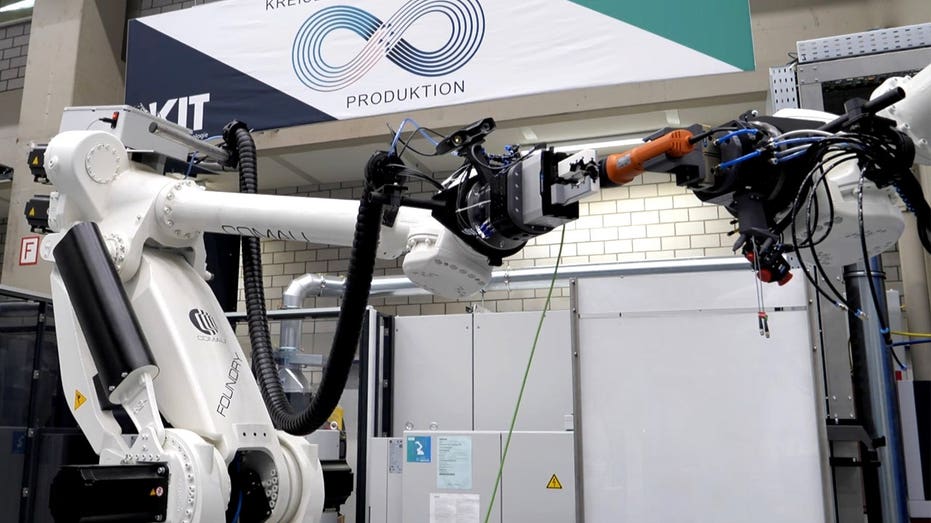
To tackle this issue, researchers at the Karlsruhe Institute of Technology (KIT) in Germany have developed a novel robotic disassembly system. Unlike traditional manufacturing setups that assume pristine conditions, this system is specifically designed to navigate the unpredictable reality of handling old, broken, or degraded machinery.
According to the source article available at Fox News, the technology addresses a major hurdle in automation: dealing with stuck screws, missing components, and devices that no longer conform to their original factory specifications.
Why Disassembly is More Complex Than Assembly
Building a new product in a controlled factory environment is an inherently predictable process. A machine or robotic arm typically knows which component comes next, the precise location of every fastener, and how to execute every programmed movement in a strict sequence.
Conversely, dismantling a broken or heavily used machine presents a completely different set of engineering challenges. Years of operational wear and tear can leave internal parts corroded, fused together, or physically damaged. Furthermore, previous repairs or modifications can alter how a product is assembled compared to its initial design.
Jan Baumgärtner, a researcher involved in the project, explained the core difficulty in practical terms. While assembly tasks follow clear, orderly steps, dismantling broken equipment opens the door to numerous unexpected complications. Consequently, a successful automated system requires far more than rigid instructions; it needs the capability to re-evaluate its environment and adjust its assumptions on the fly.
How the Probabilistic Planning System Operates
The KIT robotic system begins its workflow with a computer-aided design (CAD) model that outlines how the target product is supposed to be constructed. From there, the robot analyzes how individual parts physically behave during interaction. By testing whether a component moves in the manner predicted by the model, the system can actively update its understanding of the machine's current state.
For instance, if a screw fails to rotate according to expected parameters, the system incorporates this new piece of data into its subsequent decision-making process. The research team implements a probabilistic planning method known as a Partially Observable Markov Decision Process, commonly abbreviated as POMDP.
While the terminology sounds complex, the underlying concept is straightforward. The robot operates under the assumption that it lacks complete, perfect information about the broken machine. Instead of executing a single, inflexible plan, the system assigns various probabilities to potential issues and continuously refines its assumptions as fresh sensor and inspection data becomes available. This methodology successfully combines CAD data, physical inspection metrics, and the mechanical capabilities of the robot itself.
Real-World Testing and Tactical Adjustments
The research team at KIT has put their adaptive technology through practical physical testing to observe how it handles unexpected roadblocks. In one experimental scenario simulating an electric motor, the robot encountered a stuck screw. Rather than failing or halting the entire procedure when the fastener refused to cooperate, the system recognized the obstacle and dynamically shifted tactics. Instead of continuing to battle the stuck screw, the robot selected a milling tool to physically remove surrounding material, successfully granting it access to the targeted internal part.
In a separate test involving an angle grinder, the robotic system detected that a component screw was already missing before it even began work. By identifying this condition early, the robot bypassed unnecessary troubleshooting steps and avoided wasting time searching for a nonexistent fastener.
As global manufacturing industries continue to expand their reliance on automation, systems capable of intelligently navigating uncertainty and physical degradation may play a pivotal role in recycling, repairing, and managing complex industrial hardware.
Post a Comment