Iowa Residents and Officials Voice Concerns as Army Plans Detonation of Bomb-Making Chemicals
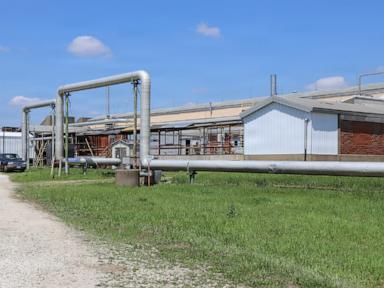
Introduction to the Impending Detonation
According to reporting by Hannah Fingerhut, Jessica Hill, and Susan Montoya Bryan of the Associated Press, residents in southeast Iowa are preparing for a potential lead dust cloud as the U.S. Army moves forward with plans to detonate approximately 5 tons of bomb-making chemicals. The material, identified as lead azide, became unusable and potentially too volatile to move safely. The detonation at the Iowa Army Ammunition Plant highlights mounting tensions between military necessity and community safety, as local populations confront environmental and health risks from the resulting air plume.
Original reporting details can be found in the Associated Press source article.
Background on the Unstable Materials
The hazardous situation stems from several dozen barrels of lead azide that were stored at the ammunition facility for more than two decades. These containers were kept in earthen-covered structures, submerged in a mixture of ethanol and water designed to maintain stability, according to Justine Barati, a public affairs specialist at the Army Sustainment Command. However, a routine inspection earlier in the year revealed that some of the water had evaporated. This evaporation caused the lead azide to crystallize, rendering the compound significantly more sensitive to friction and shock and creating what officials described as a highly unstable and dangerous condition.
When the degraded material was discovered following an operational pause for a review at the plant, Middletown residents were first informed in March. Lt. Col. Daniel Nosse, the commander of the plant, acknowledged the volatility of the chemical compound utilized in munitions production at the time, stating that the safety of the personnel and neighbors was non-negotiable. Additional details were shared with the public during an October meeting in Middletown, where officials advised that a detonation would occur sometime in November.
Timeline and Official Advisories
The regulatory approval process culminated on November 13 when the Environmental Protection Agency (EPA) granted an emergency permit. This permit mandated that the Army track potential air and dust dispersion and issue a public notification five days in advance, leading to the public advisories distributed to communities up to 100 miles away. The actual detonation was initially scheduled for a Friday, with officials recommending that residents in a specific neighborhood near the plant evacuate that morning. Those unable to leave were instructed to stay indoors with windows and doors completely closed.
Official advisories warned that the blasts would produce an air plume containing lead-containing particles, which would subsequently disperse through the atmosphere and settle onto the ground. Because lead is toxic to animals and humans, the advisory was issued out of an abundance of caution to minimize exposure. Maps released by officials indicated a potential path for the lead dust to drift northward toward additional communities. Beyond the dust hazard, rapid vibrations from the two planned blasts posed a risk of breaking older windows in the immediate vicinity of Middletown.
Community Reactions and Uncertainties
Despite official guidance suggesting that the resulting dust cloud would linger for no more than one hour depending on wind speeds, local reactions have been marked by skepticism and concern. Social media platforms quickly filled with questions from residents wondering if basic precautions, such as washing vehicles and cleaning windowsills or outdoor surfaces, would provide adequate protection. The suddenness of the wider notification also caught surrounding municipalities off guard.
For instance, city officials in Mediapolis, located less than 20 miles northeast, were approached in late October about permitting soil, water, and air testing. However, they only realized their own community sat directly in the center of the projected dust exposure zone when the official map was released. The lack of prior direct communication frustrated local leaders. Deputy City Clerk Amy Stucker noted that the situation was unprecedented for local citizens, emphasizing that the primary issue has been a severe lack of information. Even the office of Iowa Governor Kim Reynolds reported being first briefed on the public advisory on a Monday.
Local Preparations and School Closures
Faced with uncontrollable variables regarding the dispersion of lead particles, the Mediapolis Community School District announced the cancellation of classes, athletic practices, and all related events for the affected Friday. The local public library also scheduled a closure, and the fire department planned to hose down playgrounds that could be blanketed in toxic particles. To address community anxieties, the EPA established a command center in Mediapolis to monitor air, soil, and water quality during and after the operation. Additionally, city officials decided to conduct independent testing to provide further reassurance to worried residents.
The concerns extended beyond state lines, drawing the attention of environmental and public health authorities in Illinois. Those officials urged the U.S. military to execute comprehensive sampling across their state following the detonations. As the situation continued to develop, subsequent legal and operational updates emerged, with reports noting that a federal appeals court halted the detonation of the nearly 5 tons of lead azide, and the Army subsequently postponed the plan to Monday, highlighting the ongoing fluid and uncertain nature of the military's disposal efforts.
Post a Comment