US Administration Plans New Tariffs on China, EU, Brazil, and Others Over Subsidized Production
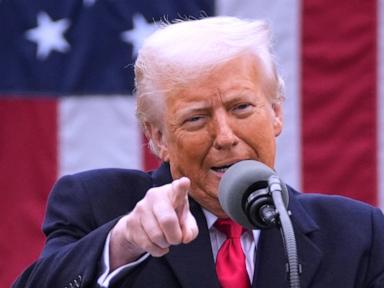
Trump Administration Moves to Increase Import Taxes
According to original reporting by Chris Rugaber, Aamer Madhani, and Josh Boak for the Associated Press, the administration of President Donald Trump is preparing to implement increased tariffs on Chinese goods by an additional 20 percent. Furthermore, the administration plans to raise import taxes on products originating from the European Union, Japan, South Korea, Taiwan, and nine other major global trading partners (ABC News). The reported measures are designed to target excessive manufacturing output sustained by foreign subsidies and trade barriers, which the administration argues places domestic American manufacturers at a competitive disadvantage.
As reported by the Associated Press, the proposed taxes are additionally intended to help recover tariff revenues lost after a Supreme Court ruling in February. That ruling determined that President Trump could not bypass Congress by declaring an economic emergency to enforce across-the-board tariffs.
Details Shared via Late-Night Briefing
The details of the planned tariffs were outlined by a senior administration official during a late-night conference call with reporters on Tuesday. This briefing occurred ahead of the official release of a series of investigations concerning the trade practices of 12 nations, the 27-member European Union, and Taiwan. The official spoke on the condition of anonymity while discussing reports that had not yet been posted by the office of the U.S. Trade Representative (USTR). Crucially, the administration stressed that these tariffs remain in the proposal stage, and the official did not provide a strict timeline for their ultimate implementation.
The policy rollout occurred early Wednesday, the day before Thanksgiving, marking another chapter in the administration's economic strategy. The Associated Press noted that the move comes on the heels of midterm elections where voters handed majorities in both the House and the Senate to Democrats. According to The AP Voter Poll, a broad survey conducted across all 50 states, roughly two-thirds of American voters expressed that the administration's policies had worsened the economy.
Justifications and Legal Framework
While President Trump has maintained that import taxes will help bring back manufacturing jobs and reduce the federal deficit, previous tariffs contributed to higher inflation. That inflation previously angered voters and prompted calls from Democratic lawmakers for mandatory congressional approval on future trade taxes. The administration counters that targeted nations have flooded the market with lower-priced goods that undermine U.S. companies, contributing to an annual goods trade deficit that has recently surpassed $1 trillion.
The legal basis for the planned tariffs relies on Section 301 of the Trade Act of 1974. This section authorizes the United States government to investigate and retaliate against foreign trade practices that violate established agreements, lack market-force justification, or actively discriminate against American products. According to the administration official, these new tariffs would align with trade agreements reached last year with dozens of nations following prior threats of severe tariff hikes.
Targeted Actions Against Specific Countries
Specific regions face unique measures under the new proposals:
- Brazil: Brazil was singled out for heightened penalties due to stalled trade talks. The U.S. has proposed increased import taxes on raw and refined sugar, alongside a new 10 percent tariff on aircraft that would directly impact Embraer, Brazil's largest aircraft manufacturer.
- China and Vietnam: For certain Chinese goods, the new 20 percent tariff will stack on top of existing import taxes to reach a total rate of 45 percent. Vietnam faces a similarly structured 20 percent rate, pending the finalization of ongoing trade talks as announced by the USTR.
- Other Partners: Tariffs for other participating trading partners are projected to range from 10 percent to 18 percent.
The administration official clarified that these planned tariffs are directed at specific products and will not stack on top of separate existing tariffs placed on automobiles, steel, aluminum, and other specific goods.
Diplomatic Context and International Response
Regarding China, the U.S. and Beijing established a trade truce last year that is scheduled to expire on January 10. The administration official indicated that the new tariffs should not come as a surprise to Beijing and are unlikely to jeopardize the existing truce. President Trump recently met with Chinese leader Xi Jinping in Shenzhen and intends to host him next month at the Group of 20 summit in Florida, where topics such as the trade truce, access to rare earth minerals, and Chinese purchases of American agricultural products are expected to be revisited.
The Chinese government has consistently opposed U.S. tariffs. Following Wednesday's announcements, China's Ministry of Foreign Affairs reiterated its opposition while urging the U.S. to settle disputes through dialogue. Ministry spokesperson Guo Jiakun stated, as reported by the Associated Press, that a trade or tariff war serves no party's interests and labeled concerns regarding overcapacity as a false narrative used as a pretext for political manipulation.
Post a Comment