NASA Chandra Telescope Reveals Milky Way's Outer Reaches May Stretch Farther Than Previously Known
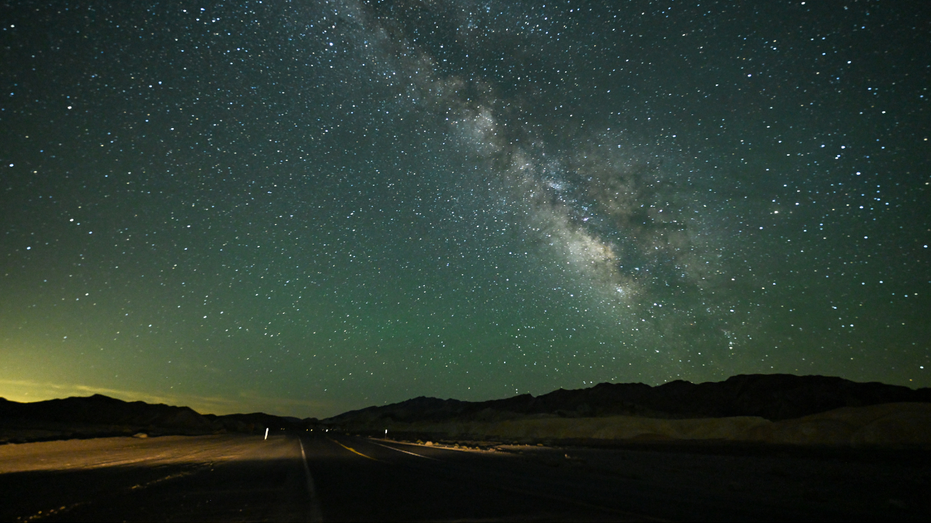
Unveiling the Extended Reaches of Our Galaxy
For generations, astronomers have mapped the structure of our home galaxy, but a recent astronomical discovery indicates that the Milky Way may be even larger than science previously recognized. According to reporting by Fox News Digital, a team of researchers has found that the spiral arms of the Milky Way galaxy could stretch considerably farther out into space than historical models suggested. This breakthrough offers a fresh perspective on the vast boundaries of our cosmic neighborhood.
The findings hinge on precise distance measurements taken of dust clouds situated within the galaxy's arms. To achieve this unprecedented level of accuracy, the scientific team utilized data gathered by two major instruments orbiting far above the Earth's atmosphere: NASA's Chandra Observatory, recognized as the most powerful X-ray telescope ever built, and the European Space Agency's XMM-Newton telescope.
A Geometric Approach to Cosmic Mapping
Mapping the true dimensions of the Milky Way has historically presented a monumental challenge for researchers. Because our solar system and the Earth are situated directly inside one of the galaxy's spiral arms, obtaining an unobstructed, external perspective has been impossible. Furthermore, many conventional techniques for calculating stellar and galactic distances depend heavily on assumptions regarding the rotation speed of the Milky Way. These assumptions tend to introduce significant uncertainty, particularly when scientists attempt to analyze the outermost, remote regions of the galaxy.
To circumvent these limitations, the research team relied on an ingenious geometric method. As detailed in the original reporting, the scientists capitalized on rare and immensely powerful gamma-ray bursts originating from distant galaxies far beyond our own. When the intense X-rays generated by these distant explosions traveled through the Milky Way, a portion of the light encountered interstellar dust clouds. This interaction caused the light to bounce off the dust, creating distinct rings that astronomers could observe and measure with remarkable precision.
Beatrice Vaia, an Italian Ph.D. student who led the study, emphasized the reliability of this technique in the original coverage. She noted that this method provides a direct means of measuring the distances to the Milky Way's spiral arms by relying exclusively on geometry, thereby avoiding the uncertainties tied to galactic rotation assumptions.
Data and Implications for Galactic Mass
The collected data yielded tangible measurements of these distant cosmic structures. According to the findings, the dust cloud located within the most distant arm of the Milky Way spans an estimated width of approximately 3,500 light-years.
While human astronomers have been aware of the existence of the Milky Way's spiral arms for at least a century, breakthroughs that bypass the complications of our internal vantage point carry profound implications for how we conceptualize the galaxy. Ilaria Fornasiero, a Ph.D. student and co-author of the study, pointed out in the source reporting that even minor differences in these measurements are highly significant. Because these distance scales are fundamental to our comprehension of the galaxy, the adjustments could require scientists to revise their estimates concerning the total mass of the Milky Way, a factor that directly influences how far the spiral arms ultimately stretch.
The Rarity of Gamma-Ray Bursts
Despite the immense scientific value of this geometric mapping technique, researchers face a notable limitation in its ongoing application. Suitable gamma-ray bursts—those possessing both the extreme brightness and the precise spatial alignment necessary to illuminate Milky Way dust clouds—are exceptionally uncommon. Over the past 25 years, scientists have identified only a handful of such events that fit the exact criteria required for this type of measurement.
Even with this scarcity, the research team remains committed to expanding their dataset. Co-author Andrea Tiengo stated in the original reporting that investigators will continue monitoring the skies for additional suitable bursts.
For further details on this discovery, read the original story on Fox News.
Post a Comment