NASA Unveils First Major New Wind Tunnel in Four Decades at Langley Research Center
A Major Milestone for NASA Research Infrastructure
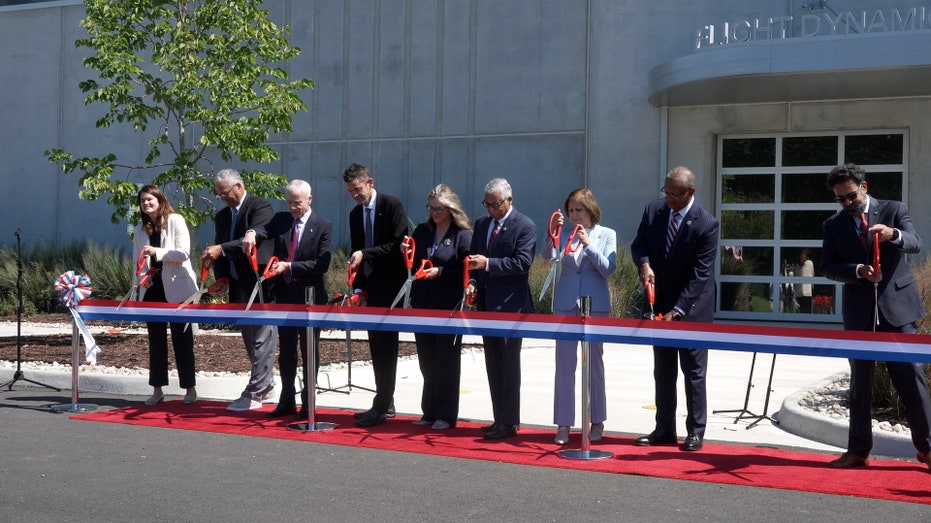
According to original reporting by Fox News, the National Aeronautics and Space Administration (NASA) has officially opened its first major new wind tunnel in more than 40 years. Located at the agency's Langley Research Center in Hampton, Virginia, the newly unveiled Flight Dynamics Research Facility represents a significant modernization of the nation's aerospace testing capabilities. The facility is expected to serve as a crucial testing ground for a wide variety of future aircraft and space missions.
Dr. Trina Dyal, the director of NASA Langley, emphasized the importance of the new installation during the opening events. As reported by Fox News, Dr. Dyal stated that the unveiling represents a substantial advancement for both NASA and the country as a whole, noting that bringing modernized testing capabilities under a single roof will enable transformative research to keep the United States at the forefront of aeronautics and space exploration.
Replacing Aging Infrastructure for Future Missions
Built through a collaborative partnership with the U.S. General Services Administration, the advanced and efficient new wind tunnel replaces two older facilities that had been in operation for more than 80 years. Fox News reported that this project forms a key component of NASA's broader strategic effort to modernize its physical infrastructure while simultaneously lowering the ongoing costs associated with maintaining aging facilities.
According to statements provided by NASA administrator Jared Isaacman and cited by Fox News, continuing to invest limited resources into maintaining historical facilities with lower current or anticipated demand would come directly at the expense of next-generation capabilities. Isaacman pointed out that these modern capabilities are essential for meeting the demands of today's missions as well as future aspirations in space and aviation.
Facility Specifications and Capabilities
The newly opened 25,000-square-foot facility features a vertical test section that measures 20 feet in diameter and stands 24 feet tall. The temperature-controlled environment is capable of generating wind speeds reaching up to 117 miles per hour. A ribbon-cutting ceremony marked the official opening, drawing hundreds of government officials, industry leaders, and community members to the Langley campus, many of whom participated in subsequent tours of the tunnel.
Technical details highlighted in the reporting reveal that the system is powered by four separate 750-horsepower motors. Each motor is paired with an eight-bladed fan measuring 14 feet in diameter. These fans utilize lightweight carbon-fiber blades, which allow engineers to adjust airflow with high speed during free-flight testing and accurately simulate flight at elevated altitudes.
Applications for Deep Space and Atmospheric Exploration
The wind tunnel is slated to play a critical role in evaluating technology intended for upcoming space exploration initiatives. According to Fox News, the facility will support testing for future missions to Earth's moon, Mars, Venus, and Saturn's largest moon, Titan. Additionally, the tunnel will be utilized to assess scale models of various vehicles designed to travel through atmospheres, including spacecraft engineered to return safely to Earth.
Giovanny Guecha, technical lead for the NASA Dragonfly parachute decelerator system, spoke to Fox News regarding the performance improvements. Guecha noted that the wind speed capabilities provided by the new facility are roughly a factor of ten greater than previous methods, enabling engineers to test under much more stressful conditions that closely replicate the environment of Venus.
David Storch, facility manager for NASA's transonic dynamics tunnel, echoed the sentiment regarding the wide-ranging utility of the new asset. As cited in the source reporting, Storch stated that the facility will undoubtedly have a role in every future space mission, particularly anything that requires returning to Earth.
Ultimately, the Flight Dynamics Research Facility is projected to supply NASA and its various partners with an indispensable resource. It will be dedicated to rigorously testing the safety, performance, and reliability of upcoming generations of rockets, aircraft, space-exploration vehicles, X-planes, drones, and autonomous flight vehicles.
For further details, read the original story on Fox News.
Post a Comment