China and Global Trading Partners Push Back Against New U.S. Tariff Plans
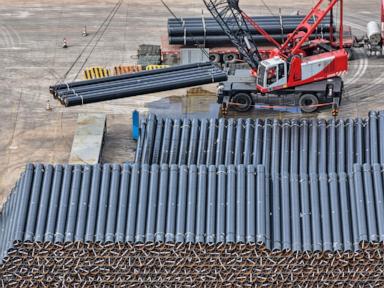
Global Pushback Against New U.S. Import Duties
According to original reporting by Associated Press business writer Chan Ho-Him, major U.S. trading partners—including China and Japan—have formally protested planned tariff hikes announced by the administration of U.S. President Donald Trump. The newly proposed import duties, unveiled on a Wednesday and reported by ABC News, are anticipated to take effect early next year. The measures follow a monthslong Section 301 investigation led by the office of the U.S. Trade Representative.
U.S. Trade Representative Jamieson Greer stated that he determined the practices of 14 distinct economies concerning excess capacity and manufacturing production are unreasonable and actively burden or restrict commerce in the United States. Analysts have noted that these 14 targeted economies collectively account for approximately half of the global economy.
The Reinstatement of Tariffs Following Judicial Rulings
The newly announced import duties are designed to help reinstate tariffs for the majority of these economies. This policy push comes in the wake of a February ruling by the Supreme Court that struck down most of the sweeping tariffs implemented by President Trump during the previous year.
However, the economic impact of these new announcements may have nuanced boundaries. Stephen Brown, a chief economist with Capital Economics, noted in a commentary that the latest U.S. tariffs are not as alarming as they might initially appear. According to Brown, the duties are essentially replacing earlier announced U.S. tariffs related to forced labor allegations from July, rather than piling on additional burdens. Even so, Brown cautioned that these new tariffs will likely push prices higher and could keep core goods inflation firm heading into the following year.
China’s Response and Ongoing Trade Truce Extensions
China, standing as one of the largest trading partners of the United States, faces an initial 20% tariff under the new proposals. This rate could potentially double to 40% if the United States determines that Beijing is not engaging adequately with Washington.
The Chinese government strongly slammed the notion of structural overcapacity, calling it a false premise. Guo Jiakun, a spokesperson for the Ministry of Foreign Affairs, stated during a regular press briefing that China opposes the use of overcapacity as a pretext for political maneuvering. Guo further emphasized that tariff wars and trade wars serve no one's interests, adding that Beijing intends to take necessary measures to defend its legitimate rights and interests.
Despite the unfolding tariff tensions, the U.S. and China have agreed to extend a bilateral trade truce by two months, which is now set to expire on January 10, 2027. Additionally, both nations have agreed on tariff cuts covering reciprocal lists of non-sensitive products valued at roughly $60 billion in total.
Responses Across Asia: Japan, Singapore, Malaysia, and Vietnam
Governments across the Asian continent have voiced strong objections or concerns regarding the proposed import duties:
- Japan: Facing new U.S. tariffs of up to 15%, the Japanese government formally lodged a protest. Chief Cabinet Secretary Minoru Kihara stated during a regular news conference that Japan possesses no nonmarket policies, practices, or structural excess production capacity. Kihara called the U.S. measures regrettable and confirmed that Tokyo has communicated its position to Washington.
- Singapore: Set to face a tariff rate of up to 20%, Singapore expressed that it was very disappointed with the U.S. proposal. The Ministry of Energy, Trade and Industry released a statement asserting that Singaporean economic policies do not protect the domestic market or subsidize manufacturing for export.
- Malaysia: Malaysian officials maintained that the country does not maintain excess manufacturing capacity capable of distorting or disrupting global markets. Kuala Lumpur indicated that it will continue consulting and engaging directly with the United States.
- Vietnam: Confronting potential tariffs of up to 35%, Vietnamese authorities reported that they are actively working alongside the U.S. to secure a trade deal.
- Thailand: In a more optimistic reaction, Thai government spokesperson Lalida Persvivatana noted that the U.S. proposal capping tariffs at 18% was more favorable than initially expected. Persvivatana stated that the Thai government will continue pursuing negotiations to secure competitive tariff levels and extra exemptions for domestic products, focusing primarily on protecting the nation's export markets.
The European Union Rejects Overcapacity Claims
The 27-nation European Union, which faces a potential 15% tariff rate under the U.S. framework, also joined in the pushback. Brussels officially rejected the premise that Europe serves as a source of structural overcapacity, pointing specifically to the lack of joint action by both the EU and the U.S. on the matter.
As these 14 global economies navigate the upcoming implementation timeline, international diplomatic channels remain active. While several nations have expressed deep disappointment and formally protested Washington's conclusions regarding manufacturing capacity, others are leaning into ongoing negotiations to carve out exemptions and protect their vital export industries as next year approaches.
Post a Comment