US Travelers Confront Long Airport Lines and Severe Weather Ahead of Thanksgiving
Holiday Travel Surge Meets Adverse Conditions
The Thanksgiving travel period is officially underway across the United States, bringing heavy congestion to both highways and airports on what stands as one of the busiest travel times of the year. According to reporting by Dave Collins of the Associated Press, travelers heading out for the holiday are encountering significant weather obstacles, including rainfall along the East Coast, snow across the central part of the nation, and coastal flooding on the West Coast. These disruptions coincide with lingering apprehensions regarding recent technology failures within the aviation sector.
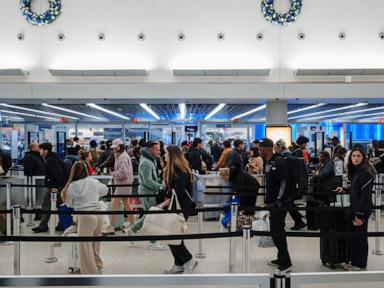
Data provided by the Transportation Security Administration (TSA) indicates that the agency anticipated screening approximately 17.6 million passengers over a week-long window stretching from Tuesday through Monday. On Wednesday morning, holiday crowds at various airports shared their experiences of extended security lines via social media. Figures from the TSA highlighted some of the most notable wait times, which reached 81 minutes at Miami International Airport, alongside approximately 40-minute waits at Newark Liberty International Airport in New Jersey and Portland International Airport in Oregon.
Among those caught in the early morning congestion was 71-year-old retiree Terri Zimmerman of Deerfield Beach, Florida. According to her interview with the Associated Press, Zimmerman spent nearly an hour waiting in the security line at Fort Lauderdale-Hollywood International Airport prior to catching a 5 a.m. flight to Tallahassee to visit relatives. She expressed surprise at finding the facility already packed at that early hour, while she and numerous other South Florida travelers simultaneously navigated heavy rains that raised concerns about localized flooding in the Sunshine State.
Projections and Air Traffic Status
Overall volume expectations for the holiday corridor are exceptionally high. AAA projected that roughly 81.5 million individuals in the U.S. will travel a distance of at least 50 miles, which equates to roughly 80 kilometers, between Tuesday and Monday. This massive projection includes nearly 73 million people traveling by automobile and nearly 6 million choosing to fly. An additional 2.6 million travelers were expected to utilize alternative modes of transportation such as buses, trains, and cruise ships.
Flight-tracking data from FlightAware illustrated some immediate impacts on aviation schedules, reporting 31 flight cancellations and more than 1,100 delays nationwide on Wednesday morning.
Not all travelers experienced negative hurdles, however. Tracy VanLeuven Miller, a retired military spouse, enjoyed a smooth experience while catching an early morning flight out of Ronald Reagan Washington National Airport destined for Atlanta. Marking her first time flying to visit family for the Thanksgiving holiday weekend—having previously relied on car travel due to affordability—she managed to clear baggage check and TSA screening in under 10 minutes. She utilized travel points to help offset expensive plane ticket prices.
Severe Weather Disruptions Across the Country
For individuals taking to the roads and skies, hazardous weather conditions posed substantial challenges across multiple regions of the United States. The National Weather Service reported that a major storm system developing along the Eastern Seaboard threatened to bring heavy rain, coastal flooding, high winds, and potential power outages to the Carolinas, the northern Mid-Atlantic, and the Northeast.
According to the National Weather Service, wind gusts along the Interstate 95 corridor were projected to reach up to 50 mph, or 80 kph. Wind advisories were subsequently posted across a wide swath stretching from northern Georgia through the mid-Atlantic and into southern New England. Furthermore, heavy rain was observed falling on Wednesday morning in localized pockets of Florida, the Carolinas, Mississippi, and western Washington state.
Winter weather also made an appearance. Winter storm warnings and watches were established for parts of Missouri and Illinois, with forecasts indicating that the St. Louis area could receive up to 9 inches, or 23 centimeters, of snow. Meanwhile, the West Coast experienced continuing king tides, prompting coastal flood warnings from Southern California up through the San Francisco area, as well as the Oregon and Washington coasts.
Concerns Over Technology Failures
Beyond weather and lines, travelers remained watchful for potential technology and system failures that previously disrupted airline operations during the month. These past incidents included a nationwide ground stop that lasted as the longest in 25 years, stemming from a Federal Aviation Administration network malfunction. Additionally, both United Airlines and Delta Air Lines experienced internal technology outages within the preceding week, resulting in hundreds of flight delays.
For further details and ongoing reporting on this holiday travel period, read the original coverage on the ABC News Source Article.
Post a Comment