Black Friday Retail Tradition Persists Despite E-Commerce Expansion and Early Holiday Deals
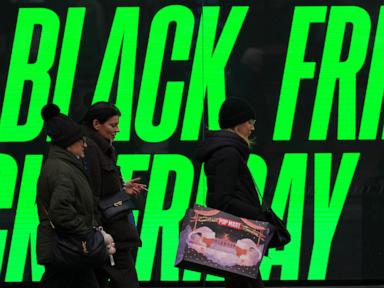
The Enduring Appeal of In-Store Shopping
According to original reporting by Anne D'Innocenzio for the Associated Press, shoppers across the United States transitioned from their Thanksgiving celebrations to traditional Black Friday store visits with notable consistency, despite navigating challenging weather conditions that included Southern California flood alerts and high winds in New York that delayed the Macy's parade. Data from retail technology company Sensormatic Solutions indicates that Black Friday maintains its position as the busiest day of the year for physical store foot traffic. This prominent status persists despite fierce competition from e-commerce platforms and merchants rolling out steep holiday discounts online weeks ahead of the actual date. For further details, consult the original coverage at ABC News.
Early Morning Crowds at Macy's Herald Square
Demonstrating the enduring nature of this retail custom, a crowd formed outside the flagship Macy's in Manhattan well before sunrise, rushing through the doors as they unlocked at 6 a.m. Among the early morning participants were visitors like Nita Lawrence and her two nieces who traveled from Miami. Although disappointed by the postponement of the annual Macy's Thanksgiving Day parade due to high wind warnings, the group found alternative satisfaction browsing promotions that featured handbags discounted between 25% and 40% alongside sneakers marked down by 20% to 50%. Lawrence noted the unique scale of the Manhattan department store, explaining their annual tradition of participating in Black Friday retail events.
Another visitor, retired Atlanta schoolteacher Anna Butler, joined five friends staying across the street to explore the flagship location early Friday morning, purchasing six pairs of jeans. Butler expressed personal financial security stemming from retirement and Social Security benefits, acknowledging broader economic concerns while highlighting her comfortable standing.
Economic Backdrop and Consumer Spending Insights
The crucial five-day retail period spanning from Thanksgiving Day through Monday is heavily analyzed by economists and market analysts seeking insights regarding consumer financial resilience and commercial outlooks for the upcoming year. According to the Associated Press report, this year's shopping window unfolded within a complex U.S. economic environment characterized by voter frustrations regarding gasoline prices—influenced by the U.S. war with Iran—alongside elevated overall inflation.
Retailers continue capturing the majority of total seasonal expenditures through physical stores, although U.S. Census data shows online channels progressively capturing a larger market share annually. Positively for the commercial sector, consumer confidence experienced an increase as domestic gasoline prices maintained a steady decline. Digital metrics from Adobe Digital Insights revealed that Thanksgiving online shoppers established a record by spending $7.1 billion online, marking a 10.4% increase compared to the previous year, driven largely by electronics and gaming purchases. Furthermore, Adobe projected that online consumers would spend a record $12.9 billion on Black Friday itself, representing a 9.2% increase year-over-year.
Broader Sales Expectations and Everyday Purchases
The National Retail Federation estimated that increased prices would constitute roughly half of the anticipated 4.1% sales growth across both physical and digital channels for November and December, with collective U.S. consumer spending projected to reach $1.01 trillion. Meanwhile, shoppers like real estate attorney Frank Cardino from Lindenhurst, New York, accompanied family members to manage purchases and hold coats while relatives tried on apparel and footwear.
Retail analysts observed that Black Friday's transformation into a multiweek promotional event encourages consumers to acquire everyday essentials such as T-shirts and shampoo alongside standard holiday gifting items. Salesforce technology company predictions indicated that the deepest discounts between the preceding Tuesday and Cyber Monday would center on home goods, apparel, and health and beauty merchandise. Caila Schwartz, a retail and consumer insights leader at Salesforce, pointed out that shoppers utilize this window not exclusively for gift acquisition, but also to secure necessary everyday goods, which significantly bolsters aggregate spending figures.
Post a Comment