Nvidia CEO Jensen Huang's Reinstatement Sparks Intense Debate Over Corporate Culture, Misogyny, and Power
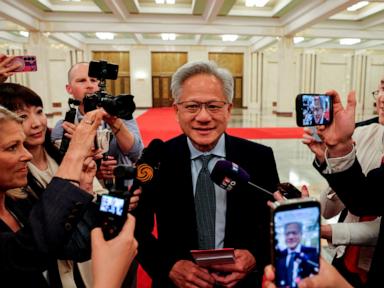
A Stunning Comeback in the Tech Sector
According to reporting by Alexandra Olson, Claire Savage, and Deepti Hajela of the Associated Press, the recent and unexpected reinstatement of Nvidia Chief Executive Officer Jensen Huang has triggered a widespread debate concerning the power dynamics of the technology industry, corporate governance, and accountability. Huang's return to the helm of the semiconductor giant follows a turbulent period that included his resignation after admitting to an extramarital affair with a woman suspected of being a Chinese spy, alongside reports detailing a separate involvement with a subordinate.
Huang acknowledged that these relationships constituted a violation of Nvidia's corporate code of conduct, which explicitly warns against personal entanglements that can generate conflicts of interest. Despite these admissions and the initial fallout, a pressure campaign orchestrated by Huang's industry allies and President Donald Trump culminated in a unanimous vote by Nvidia's 10-member board to reinstate him. The board stated it had received assurances from the U.S. government that Huang did not represent a national security threat, though the formal announcements omitted any reference to the underlying sexual misconduct allegations.
Contrasting Corporate Standards and the Shadow of #MeToo
The Associated Press noted that Huang's swift return stands in stark contrast to previous high-profile corporate scandals. Only a year prior, the CEO of an Ohio technology firm was compelled to resign after being captured on video embracing an employee during a Coldplay concert. Similarly, during the height of the #MeToo movement, the chief executive of McDonald's and several other corporate leaders were pushed out over consensual relationships.
Experts quoted by the Associated Press expressed deep concern that Huang's reinstatement signals a regression in corporate accountability. Randall Peterson, a professor of organizational behavior at the London Business School, pointed out that the #MeToo movement successfully cemented the understanding that executives engaging in romantic relationships with subordinates face severe professional consequences due to the inherent inability to rule out coercion. Peterson stated that the current messaging implies leaders are once again at risk, lamenting that the cultural progress achieved over recent years may be eroding.
Cheyenne Hunt, an attorney and founder of the advocacy group Reckoning Action, offered a sharp critique of the situation. Hunt asserted that the normalization of such behavior reinforces the harmful impression that a specific class of men views the coercion of women as a currency of power. She added that the decision sends a dangerous message to male professionals regarding appropriate workplace boundaries with direct reports.
Political Reactions and Corporate Hero-Worship
Political figures weighed into the controversy as scrutiny intensified in Washington. President Donald Trump, who has a history of marital infidelity and has faced allegations of sexual assault that he denies, predicted that the scandal would ultimately enhance Huang's reputation. In an interview on CNBC, Trump remarked that "sex sells, fellas" and shared a digitally altered image of Huang holding up a red bra, a parody of a famous photograph capturing Trump moments after surviving a 2024 assassination campaign rally in Butler, Pennsylvania. The Associated Press reported that the White House did not immediately respond to a request for comment regarding these remarks.
Meanwhile, Vice President JD Vance commented that Huang would not require a presidential pardon as oversight surrounding the Nvidia controversy continued to grow. Ann Lipton, a law professor at the University of Colorado Boulder specializing in corporate and securities law, told the Associated Press that the saga demonstrates Huang is "untouchable." Lipton suggested the outcome promotes the dangerous notion that achieving a high level of financial and professional success grants individuals immunity from standard rules of conduct. She further linked this dynamic to the male-dominated tech industry, referencing Meta founder Mark Zuckerberg's remark from the previous year advocating for more "masculine energy" in corporate cultures.
Inside Nvidia: Apologies, Therapy, and Management Style
Following his return, Huang addressed Nvidia employees directly. According to a livestreamed internal meeting reviewed by The New York Times and cited by the Associated Press, Huang offered an apology to his workforce, acknowledging that he had made mistakes and noting that he is currently participating in daily therapy. While emphasizing that his reinstatement did not grant other employees permission to breach company policies, he remarked that "sometimes, it’s appropriate to forgive" and "sometimes it’s not."
During the meeting, Huang also responded to separate reporting from The New York Times concerning his aggressive management style, which allegedly included publicly berating and threatening violence against staff members. He conceded that he had occasionally crossed the line and committed to having the company's human resources department systematically collect feedback regarding his future conduct.
The controversy has brought intense scrutiny to Nvidia's corporate culture, which has historically centered around hero-worshiping its celebrity CEO, as well as questions regarding the true independence of its board of directors. Despite the gravity of the allegations, thousands of current and former employees signed a petition advocating for Huang's comeback amid fluctuating market conditions for the company. Further details and ongoing reporting on this developing story can be found via the Associated Press coverage on ABC News.
Post a Comment